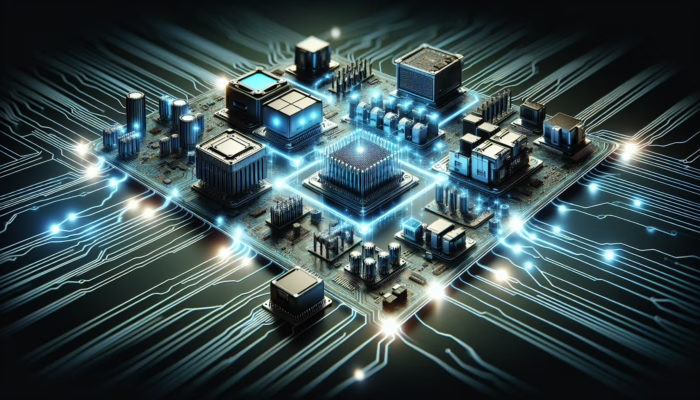
In today’s rapidly evolving technological landscape, businesses relentlessly pursue methods to enhance operational efficiency and optimise workflows. A pivotal element that underpins smooth operations is the effective integration of hardware components within an organisation’s systems. Hardware integration plays a crucial role in amplifying productivity, streamlining processes, and encouraging innovation. This article thoroughly examines the significance of hardware integration and its profound influence on achieving successful system integration.
Mastering the Essentials of Hardware Integration
Hardware integration encompasses the detailed process of uniting a variety of physical components, which include computers, servers, networking devices, sensors, and other peripherals, into a cohesive system. This integration allows these components to function together seamlessly, facilitating the efficient exchange of data and information across various hardware platforms. By guaranteeing effective communication among these components, organisations can significantly enhance their overall operational efficiency and responsiveness.
The concept of hardware integration comprises both physical and logical dimensions. Physically, it involves the connection and configuration of multiple components to ensure they operate in harmony. On the logical side, it includes the establishment of protocols, interfaces, and communication pathways that promote data exchange and interaction among the components. This comprehensive approach ensures that the hardware functions seamlessly, resulting in a marked improvement in performance.
Understanding How Hardware Integration Influences System Integration

- Boosting Efficiency: Through hardware integration, organisations can optimise resource utilisation, mitigate redundancy, and enable effective sharing of data and resources across various hardware components. This streamlined approach not only enhances overall system efficiency but also helps eliminate potential bottlenecks.
By integrating hardware components, businesses can avoid the necessity for isolated systems and duplicate hardware setups. This consolidation encourages better resource utilisation, allowing components to be accessed and shared among multiple systems. For instance, a centralised server can efficiently manage and distribute data to various computers, thus reducing the need for individual storage devices and enhancing overall productivity.
Furthermore, hardware integration enables the automation of processes and workflows. By linking various components, organisations can improve data flow, reducing the need for manual interventions. This automation significantly decreases the likelihood of human error and guarantees a seamless and continuous flow of information, thereby markedly increasing operational efficiency.
- Enhancing Data Accessibility: The integration of hardware components fosters a fluid data flow and enhances accessibility. This capability allows for real-time data exchange and retrieval, ensuring that essential information is readily accessible across the organisation. Such integration simplifies data analysis, facilitating informed decision-making and prompt responses to changing business requirements.
Through effective hardware integration, organisations can create reliable and efficient mechanisms for data exchange. For example, integrating networking devices can establish a robust, scalable network infrastructure. This infrastructure supports the seamless transfer of data across various systems and devices, enabling real-time accessibility and analysis of critical information.
Additionally, hardware integration allows for the inclusion of sensors and other data collection devices. These sensors can gather and transmit data in real time, providing organisations with vital insights for strategic decision-making. This heightened data accessibility empowers businesses to swiftly respond to market trends and customer demands, enhancing competitiveness.
- Minimising Costs: By integrating hardware, organisations eliminate the need for standalone systems and redundant hardware setups. This unified infrastructure leads to cost savings in hardware procurement, maintenance, and operational expenses. Furthermore, it supports scalability, enabling businesses to adapt and expand their systems without incurring significant investments in additional hardware.
The consolidation of hardware components through integration can yield substantial financial advantages. Instead of investing in separate systems and hardware for each operational function, organisations can utilise a unified infrastructure. This strategy not only lowers hardware procurement costs but also minimises ongoing maintenance and operational expenses, providing a more efficient use of resources.
Moreover, hardware integration supports scalability. As organisations grow and evolve, they can effortlessly add or remove hardware components without incurring additional costs. For instance, businesses can enhance server capacity or introduce more networking devices to accommodate increased data traffic, ensuring they remain responsive to evolving demands.
- Improved Security Measures: The integration of hardware components significantly enhances overall system security. Centralised control mechanisms can be established to ensure data integrity, access control, and protection against unauthorised access. A well-integrated hardware system strengthens cybersecurity measures, thereby minimising the risk of data breaches or system vulnerabilities.
By implementing hardware integration, organisations can create robust security measures across their entire system. Centralising control allows for consistent security protocols and access controls to be employed. For example, a unified authentication system can verify user identities swiftly, restricting unauthorised access and enhancing security.
Furthermore, hardware integration facilitates the introduction of encryption and data protection mechanisms. Organisations can secure data transmission and storage, thereby reducing the risk of breaches and unauthorised access. By embedding security features directly at the hardware level, organisations can create a strong foundation for comprehensive system security and resilience against threats.
- Streamlining Workflows: The integration of hardware components promotes the automation of processes and workflows, minimising manual interventions and reducing the likelihood of human error. By integrating these components, organisations can support the smooth and uninterrupted flow of information, allowing employees to focus on more critical tasks.
With hardware integration, organisations can effectively automate repetitive tasks and workflows. For example, hardware components can be linked to enable automatic data synchronisation across diverse systems. This automation eliminates the need for manual data entry, significantly reducing the potential for errors and delays in operations.
Moreover, hardware integration fosters seamless collaboration and communication among various departments and teams. Integrated systems facilitate real-time data sharing and instant communication, enhancing cooperation and decision-making. This streamlined workflow ensures that employees can devote their attention to tasks that require their expertise and creative input, driving innovation within the organisation.
Implementing Best Practices for Successful Hardware Integration
To achieve effective hardware integration within a system, organisations should consider adopting the following best practices:
- Thorough Planning and Evaluation: Begin the process by carefully assessing the organisation’s requirements and objectives. Identify the essential hardware components for the system and evaluate their compatibility, scalability, and interoperability. This initial planning stage establishes a solid foundation for successful hardware integration.
Comprehensive planning and evaluation are paramount for effective hardware integration. Organisations must clearly define their system requirements and objectives. This involves identifying necessary hardware components and assessing their compatibility with existing systems. Evaluating scalability and interoperability ensures that the integrated system can accommodate future growth and interact seamlessly with other systems, promoting long-term success.
- Adopt Standardisation: Standardise hardware components to promote compatibility and facilitate easy integration. Embrace industry-standard protocols and interfaces to simplify the integration process and reduce complexity. This practice enables seamless communication and data exchange across different hardware platforms, enhancing operational efficiency.
Standardisation is crucial for efficient hardware integration. By adopting industry-standard protocols and interfaces, organisations can enhance compatibility and streamline the integration process. This standardisation fosters seamless communication and interoperability among various hardware components, making it easier to implement and maintain integrated systems.
- Encourage Modularity and Flexibility: Design the architecture of hardware integration with a modular approach. This facilitates flexible customisation and scalability, allowing for the easy addition or removal of hardware components based on evolving business needs. Modularity also simplifies troubleshooting and maintenance processes, ensuring operational continuity.
A modular approach to hardware integration enhances flexibility and scalability. By architecting the system with modularity in mind, organisations can easily add or remove hardware components as needed. This adaptability enables businesses to modify their systems responsively in response to changing requirements, without disrupting the entire infrastructure.
Furthermore, modularity simplifies troubleshooting and maintenance. If a specific hardware component encounters an issue, it can be quickly identified and replaced without affecting the entire system. This reduces downtime and ensures continuous operations, allowing businesses to maintain productivity.
- Conduct Interoperability Testing: Perform thorough interoperability testing to validate the seamless integration of diverse hardware components. This testing ensures that the integrated system operates as intended and identifies any potential issues or conflicts that may arise during operation.
Interoperability testing is essential for ensuring the smooth operation of the integrated hardware system. By examining the compatibility and functionality of different hardware components, organisations can identify and address any potential issues or conflicts. This testing validates the seamless integration of components, ensuring that the system operates effectively and meets organisational needs.
- Maintain Documentation and Provide Training: Keep comprehensive documentation of the hardware integration process, including configuration details, network diagrams, and troubleshooting guidelines. Provide training and resources to employees to familiarise them with the integrated system and its functionalities. This practice ensures smooth adoption and efficient utilisation of the integrated hardware components.
Thorough documentation is vital for the successful implementation and maintenance of the integrated hardware system. Organisations should maintain detailed records of the hardware integration process, covering configuration details, network diagrams, and troubleshooting instructions. This documentation serves as a valuable reference for future maintenance and troubleshooting efforts.
In addition, providing training and resources to employees is essential for facilitating a smooth transition and efficient use of the integrated system. Employees should be thoroughly acquainted with the functionalities of the integrated hardware components and trained on how to leverage them effectively. This ensures maximum benefit from the integrated system, contributing to overall operational success.
Identifying and Overcoming Challenges in Hardware Integration
While hardware integration offers numerous benefits, it also presents specific challenges that organisations must navigate:
- Addressing Compatibility Issues: Integrating hardware components from different manufacturers may lead to compatibility challenges. It is crucial to ensure that the selected hardware components can effectively communicate and function together within the integrated system.
Compatibility challenges can arise when integrating hardware components sourced from various manufacturers. Organisations need to meticulously evaluate the compatibility of the chosen components. This evaluation involves examining factors such as hardware specifications, communication protocols, and software compatibility. Ensuring compatibility is essential to prevent operational limitations or complications within the integrated system.
- Managing Complexity: The hardware integration process can become intricate, particularly when dealing with numerous components and complex system requirements. Organisations must meticulously plan and execute the integration process, taking into account potential complexities to facilitate a smooth transition.
Hardware integration can indeed be complex, especially when working with a diverse range of components and varied system requirements. Organisations should dedicate time to detailed planning and execution to effectively tackle potential complexities. This planning should encompass aspects such as hardware configuration, data flow, and system dependencies. By addressing these complexities, organisations can facilitate a successful transition to an integrated system.
- Ensuring Ongoing Maintenance and Support: Integrated hardware systems require regular maintenance and support to sustain smooth operations. Organisations should establish robust mechanisms to address hardware failures, perform upgrades, and provide timely support to minimise downtime and disruptions.
Integrated hardware systems necessitate continuous maintenance and support to guarantee optimal performance. Organisations should implement effective strategies to address hardware failures, execute necessary upgrades, and offer timely support. This includes setting maintenance schedules, monitoring hardware performance, and preparing contingency plans for potential failures. Prompt maintenance and support are crucial for minimising downtime and ensuring uninterrupted operations.
Embracing the Future of Hardware Integration for Competitive Advantage

The integration of hardware components is a fundamental aspect of effective system integration. By seamlessly uniting hardware components, organisations can boost productivity, streamline workflows, and foster innovation. By embracing best practices, addressing challenges proactively, and fully committing to hardware integration, businesses can strategically position themselves in the ever-evolving technological landscape.
Q1: What is hardware integration?
A1: Hardware integration refers to the process of merging various physical components such as computers, servers, networking devices, sensors, and other peripherals into a unified system, allowing them to function effectively together.
Q2: How does hardware integration enhance efficiency?
A2: Hardware integration boosts efficiency by optimising resource utilisation, minimising redundancy, and facilitating effective sharing of data and resources among different hardware components. It also enables the automation of processes and workflows, reducing the likelihood of human error and ensuring a smooth flow of information.
Q3: What are the benefits of hardware integration for data accessibility?
A3: Hardware integration promotes seamless data flow and accessibility, enabling real-time data exchange and retrieval. It allows for the establishment of reliable and efficient data exchange mechanisms, such as a robust and scalable network infrastructure. The integration of sensors and data collection devices also provides valuable insights for decision-making.
Q4: How does hardware integration contribute to cost reduction?
A4: Hardware integration eliminates the need for standalone systems and redundant hardware setups, resulting in significant cost savings. It reduces hardware procurement costs, minimises maintenance and operational expenses, and facilitates scalability without substantial investments in additional hardware.
Originally posted 2024-04-22 22:38:10.
The post Hardware Integration: Essential for Successful System Integration appeared first on Healthcare Marketing Service.